Last updated November 20, 2026
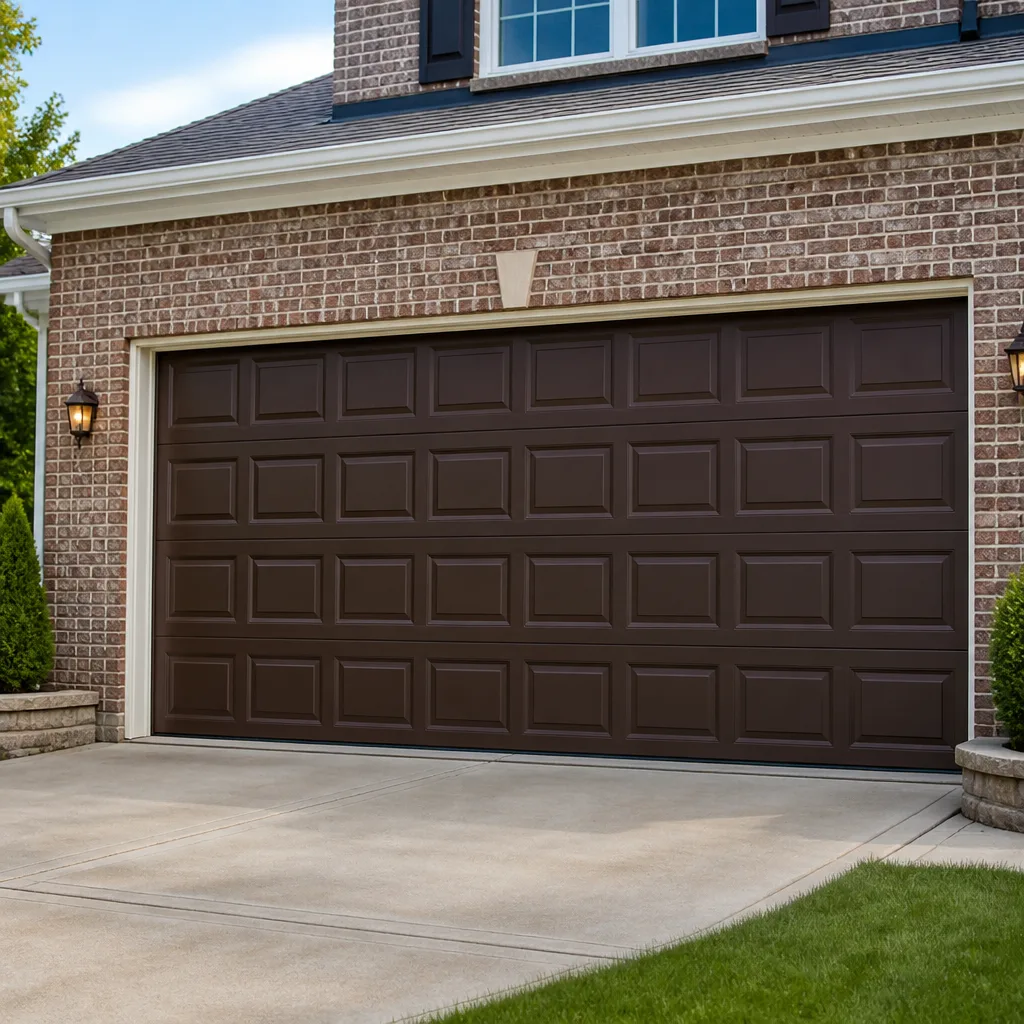 Raised-panel steel
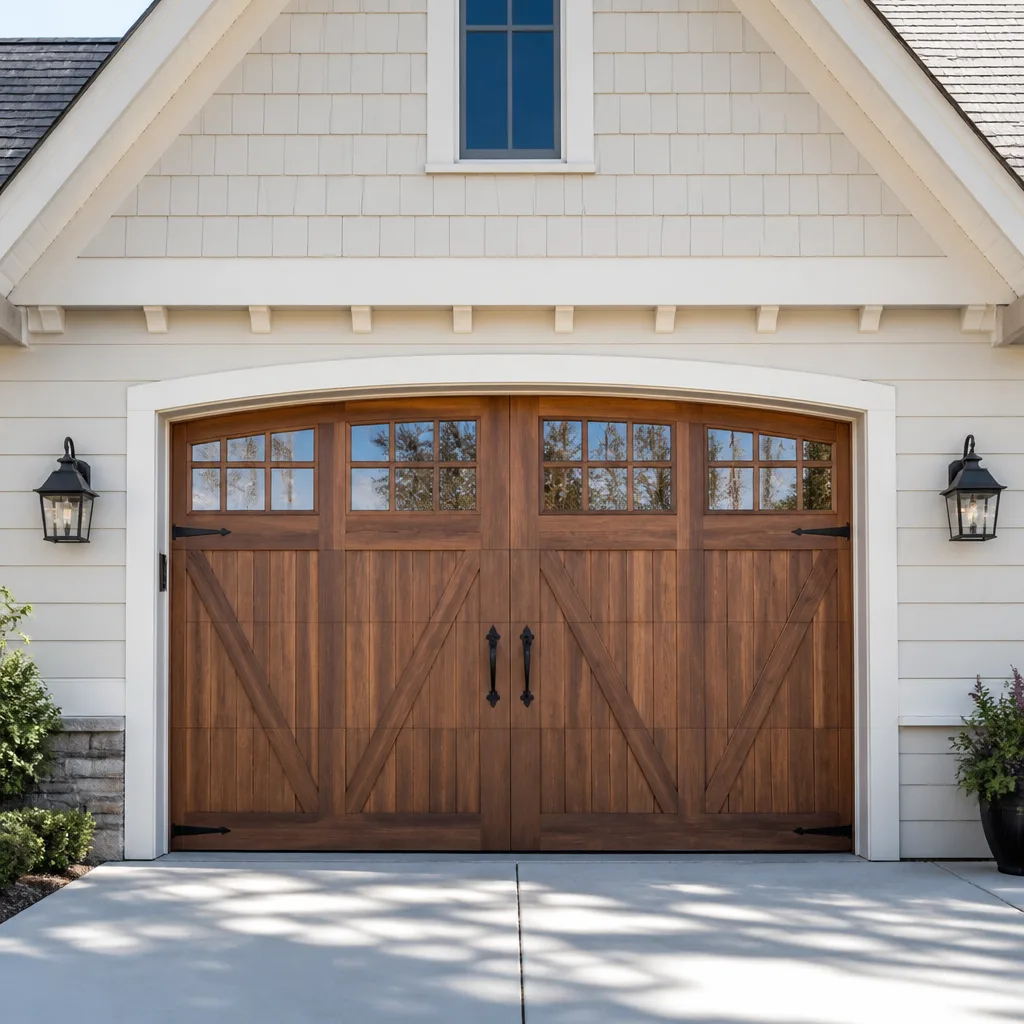 Carriage house
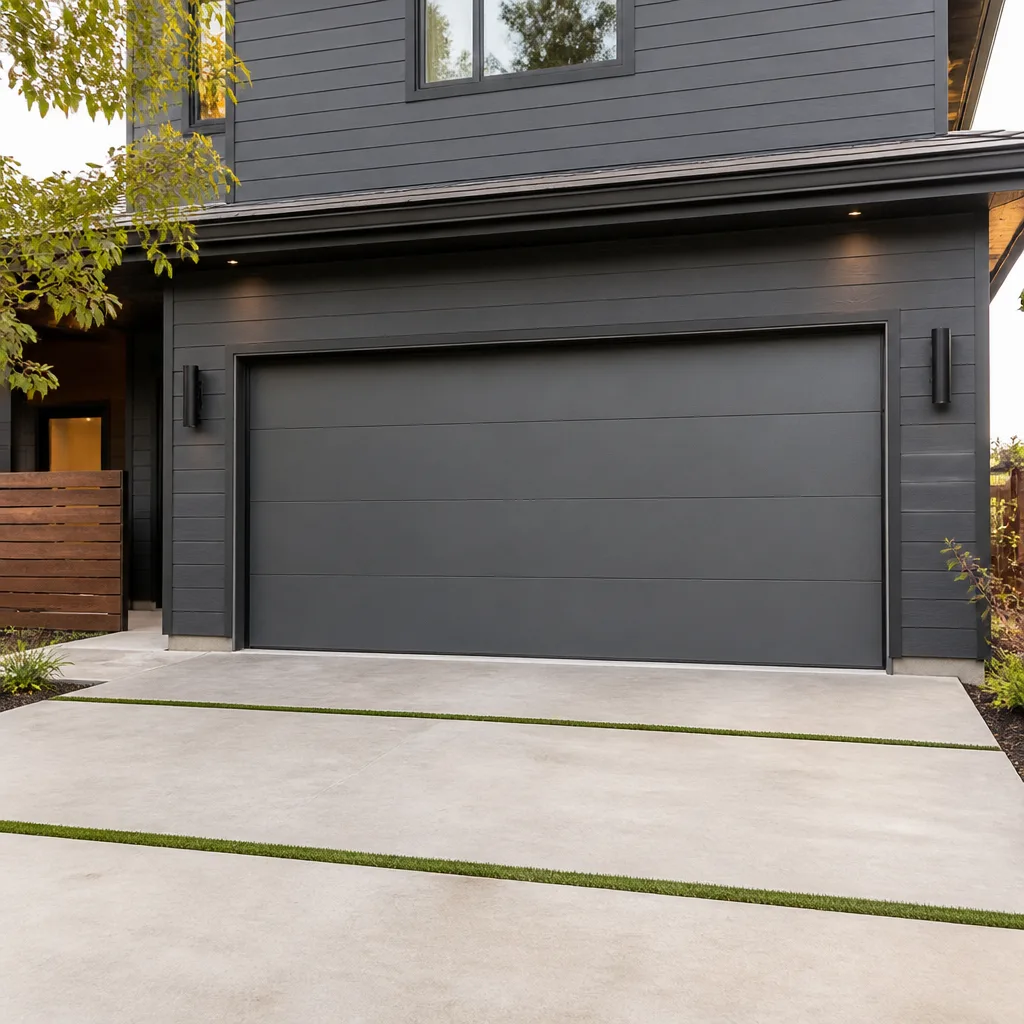 Modern flush
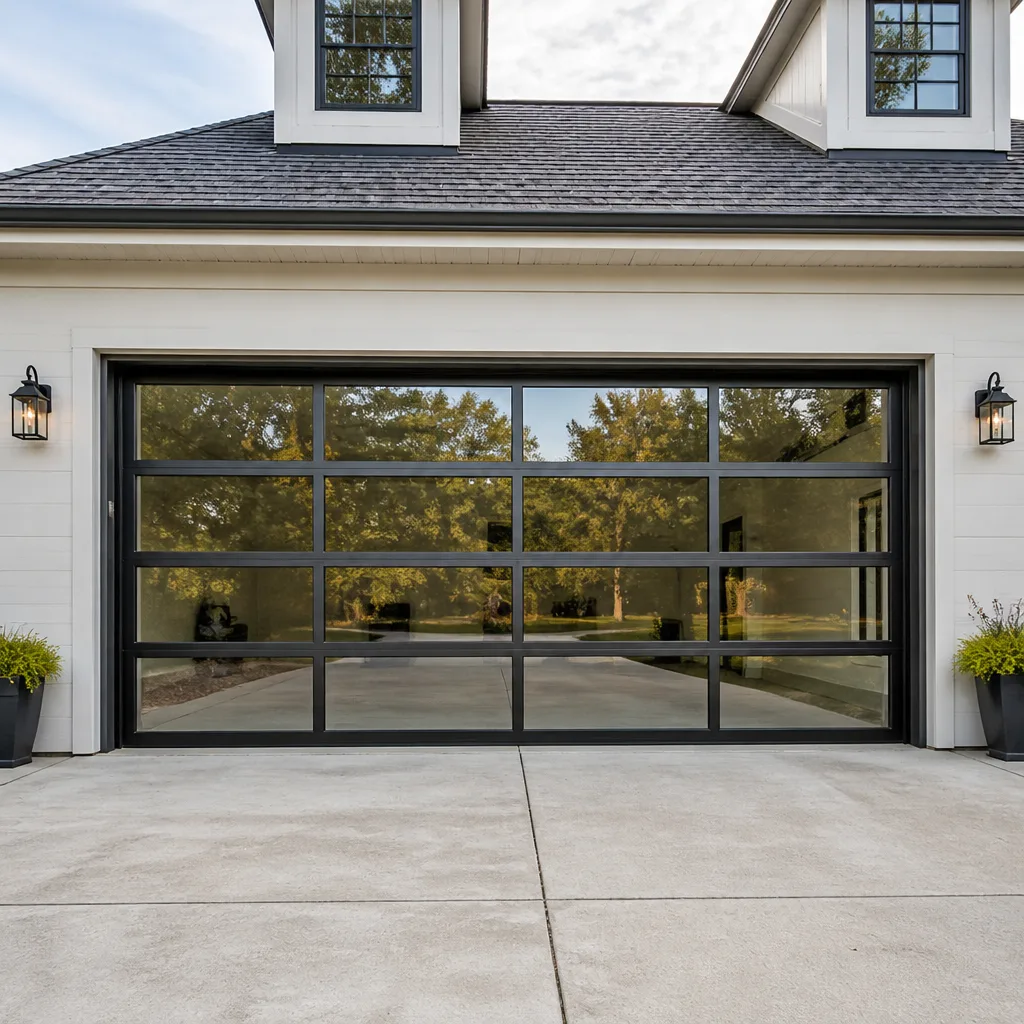 Full-view glass
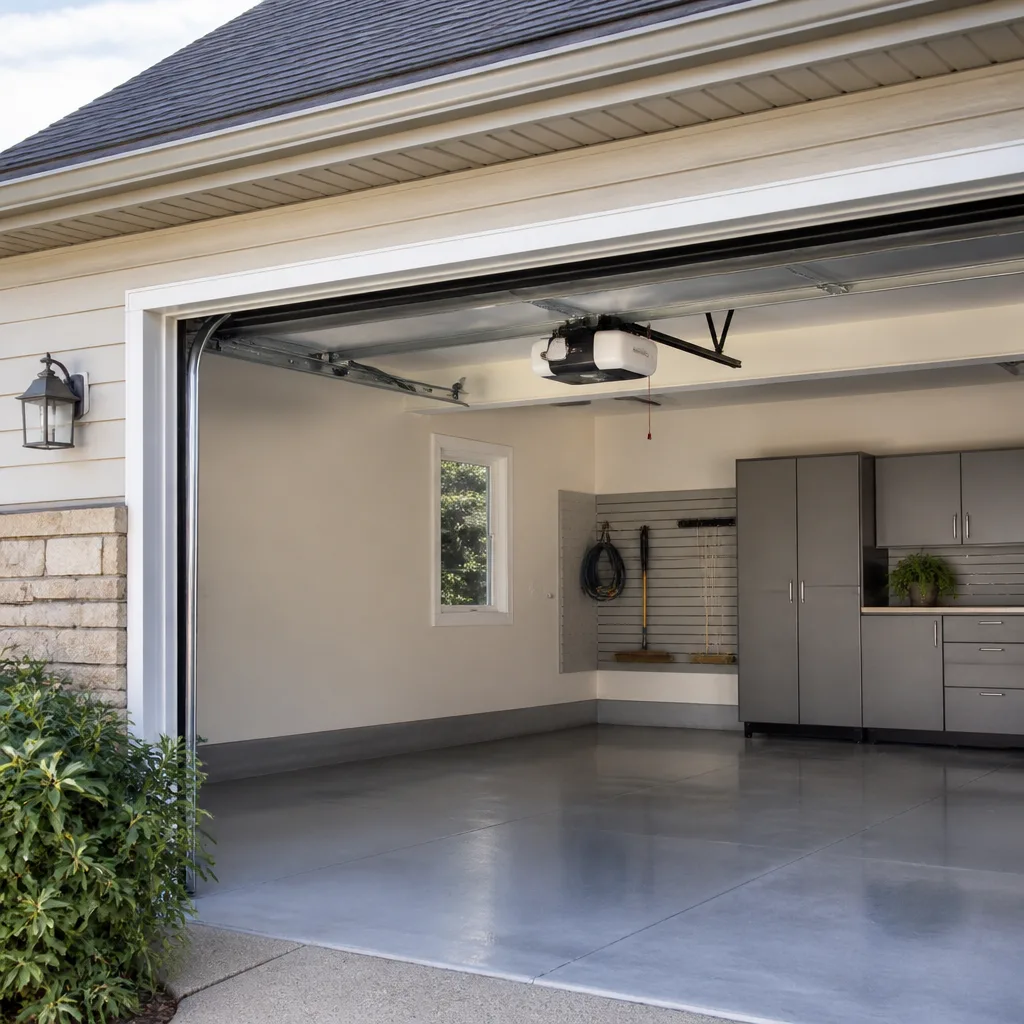 LiftMaster openers
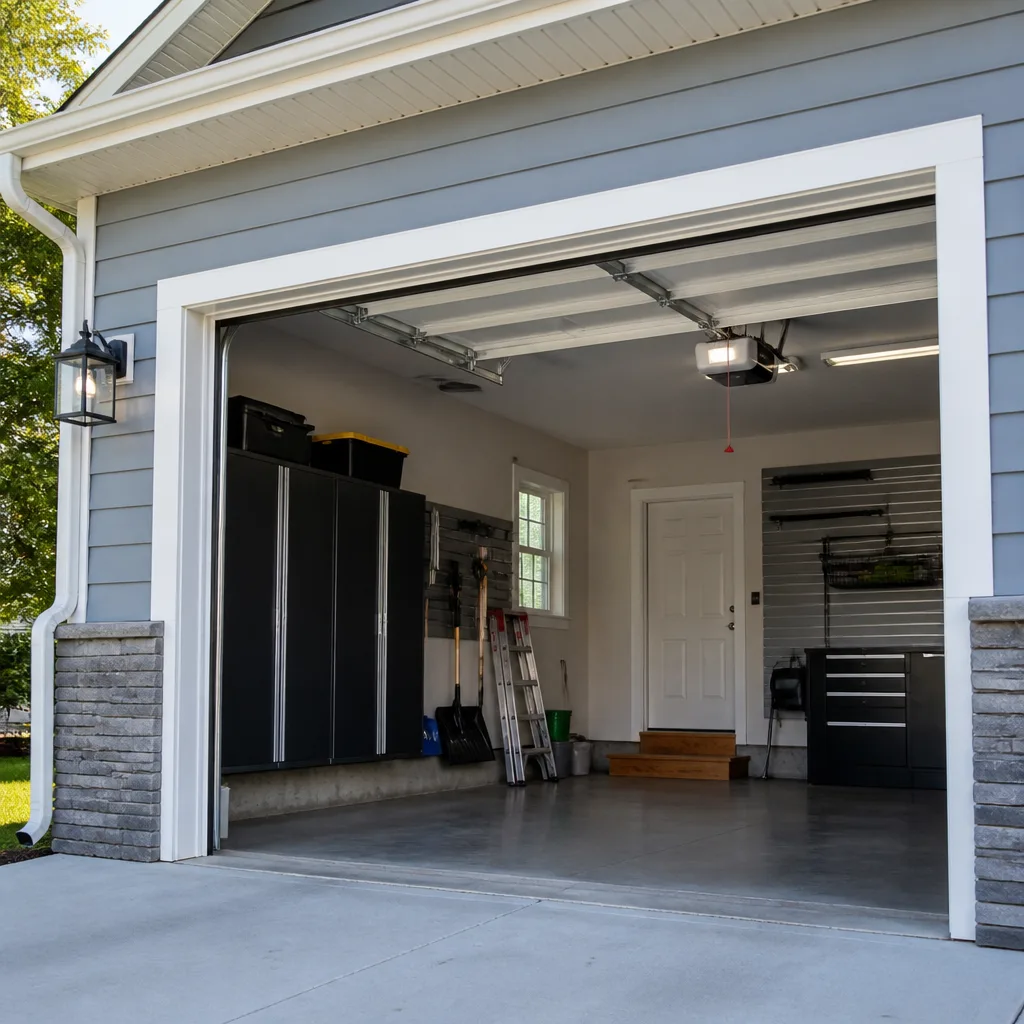 Chamberlain openers
Full 25-point door and opener safety check with every visit - springs, cables, rollers, tracks, and your LiftMaster or Chamberlain opener included
You get a price before we start. It does not change when the pro arrives.
Get your free estimateGarage Door Emergency Preparedness Guide for Holly Hills Homes
During a Missouri ice storm, your garage door is at once the entry point your household uses most and one of the likeliest things on the house to fail. A door frozen to the ground, a door stuck mid-travel during a power outage, and a door with a broken spring can all look the same from inside the garage, and treating them the same way can burn out an opener motor or bend a track past saving. Mechanical failure, power loss, and storm damage each call for a different first move and a different kind of help. This guide walks through each one for Holly Hills homeowners: what to do, what not to touch, and when a failed door should wait.
Quick Answer
In a garage door emergency in Holly Hills, match your response to the failure. For a power outage, use the manual release cord only when the door is fully closed, then secure the garage by other means. For a door frozen to the ground, free the seal gently without forcing the opener. For a broken spring or a visibly bent track, stop using the door and call a professional, because those are high-tension failures that can injure someone or wreck the door.
Styles & brands we work with
- Raised-panel steel
- Carriage house
- Modern flush
- Full-view glass
- LiftMaster openers
- Chamberlain openers
Table of Contents
- Why Holly Hills Doors Fail in Three Different Ways
- What to Do During a Garage Door Power Outage
- How to Use the Manual Release Cord Correctly
- Frozen Door Protocol for Missouri Ice Storms
- Post-Storm Damage Assessment After High Winds
- When to Leave the Door Closed and Call for Help
- Preparing Your Holly Hills Garage Before the Cold Arrives
- Keeping the Garage Secure When the Door Won’t Close
Why Holly Hills Doors Fail in Three Different Ways
Garage doors fail along three tracks: mechanical, electrical, and weather. Each one leaves you standing in the same spot, looking at a door that won’t move, but each has its own cause and its own safe response. Knowing which one you’re facing before you touch anything is the difference between a quick fix and a bigger repair.
A mechanical failure is something in the door’s moving parts giving out. The classic example is a broken torsion spring, which announces itself with a loud bang and leaves the door too heavy to lift by hand. Extension springs on older doors fail the same way. Cables can jump their drums, rollers can break, and tracks can bend if the door hits something while it’s traveling.
An electrical failure is the opener or the power feeding it. The door itself may be perfectly sound, but the motor won’t run, the remote won’t respond, or the safety sensors see an obstruction that isn’t there. Homes in Holly Hills with older LiftMaster and Genie units tend to hit this first, often because a sensor got knocked out of alignment during yard work or a storm.
Weather failures are specific to our climate. Ice storms and hard freezes are the big ones. The bottom rubber seal freezes to the concrete apron, and the opener keeps pulling until something gives way. High wind after a summer storm can push a panel out of alignment or pop a cable loose from its drum. These look like mechanical failures, but they start with the weather, which is why the response is different.
Sorting out which failure you’re looking at takes a minute and saves a lot of damage. If the door won’t move and the opener hums, it’s mechanical or frozen. If the door is fine but nothing runs, it’s electrical. If the door is sitting crooked or the panels are out of line, it’s storm damage. We handle all three, from the opener to the spring to the panel, and knowing which one you have tells you whether to call today or wait for daylight.
What to Do During a Garage Door Power Outage
When the power goes out, the safest first move is to leave the door closed and wait. A door that’s fully closed is locked, sealed, and sitting in its strongest position. Most of the risk in a power outage comes from trying to open a door you don’t need to open, so ask whether you actually need the car before you touch the release cord.
If you do need to get the car out, you have two options. The first is the manual release, covered in detail in the next section. The second is the battery backup, and several common opener models have one built in. LiftMaster and Chamberlain units with a battery backup can cycle the door a set number of times without household power, and Genie offers similar features on some models. If your opener has a battery, the door may open normally with no manual release needed. Check whether the unit has a battery compartment and whether the battery is still good, because a dead backup battery is a surprise you don’t want mid-storm.
If your opener doesn’t have a battery backup, the manual release is the way. Before you pull it, make sure the door is fully closed. Releasing a door that’s partway up can let it drop, and releasing one with a broken spring is dangerous because the door’s weight is no longer being held by anything. Once the door is released, lift it by hand if it’s balanced and light. A well-adjusted door lifts with steady pressure from one hand. A door that fights you is telling you something is wrong, and it should stay down.
During longer outages, a few simple habits keep the garage secure. Keep the door closed and locked at night. Don’t prop it open for ventilation. If you have to leave the car outside, move anything valuable out of the garage and out of sight. In our experience, most Holly Hills power outages resolve within hours, and the door usually works fine once power returns. If it doesn’t, that’s when you call.
How to Use the Manual Release Cord Correctly
The manual release is the red cord hanging from the opener’s trolley, and using it correctly comes down to one rule: pull down and toward the door, never sideways or at an angle. The trolley carriage rides on a rail, and pulling the cord off-axis can bend the carriage or jam it on the rail, which turns a simple power outage into a repair.
Follow this sequence:
- Make sure the door is fully closed and the opener is off (unplug it or switch off the breaker if you can).
- Stand directly under the trolley, not off to the side.
- Pull the cord straight down, slowly, until you feel the carriage release. Don’t yank it.
- Let the door stay closed for a moment. Confirm it feels balanced before you lift.
- Lift the door slowly by hand to about waist height, then to the fully open position. If it ever feels too heavy, lower it back down.
- When power returns, re-engage the carriage by running the opener once. The trolley should snap back into the carriage on the next cycle.
The most common mistakes we see are pulling the cord while the door is partway open, pulling it sideways, and forgetting to re-engage the carriage afterward. Each one can leave the opener running without moving the door, which wears the motor and confuses the travel limits. A Clopay or Amarr door that’s properly balanced will stay put when you let go at any point; if it drops or creeps, the springs need attention.
A word on safety: the manual release is safe to use on a healthy door, but never on a door with a visibly broken spring or a cable that’s off its drum. In that condition, the door’s weight is unmanaged and can come down hard. Leave it closed and call us. Our technicians have up to 13 years of experience with these systems and can assess what’s safe to operate.
Frozen Door Protocol for Missouri Ice Storms
A garage door frozen to the ground is the most common winter emergency in Holly Hills, and the biggest mistake is hitting the opener button. The opener will pull against a door that can’t move, and either the bottom seal tears, the drive gear strips, or the trolley jumps the rail. None of those are cheap fixes, and all of them are avoidable.
Here’s how to free a frozen door safely:
- Stop using the opener the moment the door doesn’t lift normally.
- Look along the bottom seal for the ice bond. It usually forms at the corners and along the center where meltwater pools.
- Break the bond gently with a plastic scraper or the flat side of a broom handle. Never use a metal shovel or an ice pick near the seal or the panels.
- Work from one end to the other, lifting the seal slightly as you go. Don’t pry hard against the bottom section.
- Once the seal is free, lift the door by hand a few inches to confirm it moves cleanly, then run the opener.
- Clear snow and ice from the apron in front of the door so it doesn’t refreeze the next night.
If the door still won’t move after the seal is free, something else is going on. A frozen track or a torsion spring that’s weakened in the cold can feel like a stuck door. In that case, leave it closed and call. We work on spring repair done safely, and cold weather is exactly when those parts are under the most stress.
Prevention matters more than any rescue. Before the first hard freeze, check the bottom seal for cracks, clear the apron of debris, and make sure the door closes fully without a gap. A tight seal keeps water out and ice from forming underneath. It’s a small errand that saves a morning of prying.
Post-Storm Damage Assessment After High Winds
After a strong Missouri storm, walk around the door and look before you run it. High wind can push a panel out of line, pop a cable loose, or bend a track, and running the opener on a damaged door makes all three worse. The check takes two minutes and follows a set order.
- Panels: Stand back and look for dents, cracks, or panels that are out of line with their neighbors. A bent panel can bind against the track.
- Track alignment: Look down the vertical and horizontal tracks. They should be straight and parallel. Any visible bend means stop.
- Cable seating: Check that the cables are seated in their drums on both sides. A cable that’s jumped or is hanging loose is dangerous and needs a professional.
- Springs: Look at the torsion spring above the door. A visible gap in the coil means it’s broken. Extension springs should be intact and hooked securely.
- Weather seal: Check the bottom seal and the side seals for tears. A torn seal lets water in and can freeze the door shut.
- Opener and sensors: Confirm the safety sensors are aligned and the opener’s travel limits haven’t shifted. Run the door once by hand before you use the opener.
If everything looks straight and the door moves freely by hand, run it once with the opener and watch the whole cycle. If anything looks bent, cracked, or off its track, leave the door closed. A damaged door that’s forced can come off its tracks entirely, which is a much bigger repair than a bent panel.
Roofers and siding crews working after a storm are another common cause of door damage in Holly Hills. Ladders, dropped tools, and debris can dent panels or knock a track out of line without anyone noticing. If your door was fine before a crew was on the roof, look closely before you assume the problem is the opener.
When to Leave the Door Closed and Call for Help
Not every failure needs a same-day visit, but some absolutely do. The dividing line is whether the door is safe to operate and whether the garage is secure. If the door is closed and locked and nothing is hanging loose, you can usually wait for a scheduled appointment. If the door is open and won’t close, or if a spring or cable has failed, that’s an emergency.
Leave the door in place and call right away when:
- A torsion or extension spring has broken. The door is now unsupported and dangerous to lift.
- A cable has come off its drum or is hanging loose.
- The door is off its track or sits crooked in the opening.
- The door is open and won’t close, leaving the garage unsecured.
- A panel is cracked or hanging and could fall.
You can usually schedule a visit for a failed opener, a remote that won’t work, or a door that runs but is noisy or slow. Those aren’t dangerous, and the garage stays secure while you wait. For repair topics, our Garage Door Repair Holly Hills page covers what a typical visit involves.
One more distinction. If the door is closed and the spring is intact, you can often secure the garage by other means and book a normal appointment. If the door is stuck open, that’s a security problem and a same-day call. We’re open Sunday through Friday, 7am to 7pm, and closed Saturday.
Preparing Your Holly Hills Garage Before the Cold Arrives
The best emergency plan is the one you never have to use. A little prep in the fall keeps most winter door failures from happening at all, and it’s the kind of work a homeowner can do without special tools.
- Test the door’s balance by hand with the opener disconnected. A balanced door stays put at any height.
- Look at the springs for gaps, rust, or sagging. A weakened spring fails faster in cold weather.
- Lubricate the rollers, hinges, and track with a garage-door lubricant, not household oil or grease.
- Check the bottom seal for cracks and replace it if it’s torn. A good seal keeps ice from bonding to the floor.
- Clear the apron in front of the door and make sure the concrete drains away from the opening.
- Test the safety sensors by blocking them and confirming the door reverses.
- Check the opener’s battery backup if it has one, and replace the battery if it’s old.
These steps matter more in Holly Hills than in milder climates because our freeze-thaw cycles work the door hard. Water gets into small cracks, freezes, and widens them. A seal that’s fine in October can be a problem by January. If you’re not sure what to check, a service call in the fall can catch worn parts before they fail mid-storm. For a full replacement rather than a repair, our garage door installation page explains what a new door involves and how it’s measured and ordered.
Keeping the Garage Secure When the Door Won’t Close
If your door is stuck open, the priority shifts from repair to security. An open garage is an open door to the house, and a few temporary measures keep the space safe while you wait for service.
First, move anything valuable out of the garage and into the house. Tools, bikes, and anything visible from the street are the first targets. Second, block the opening with something solid. A sheet of plywood braced against the frame, or a vehicle parked close to the opening, gives you a barrier. Third, lock the door between the garage and the house and use the front door until the garage door is fixed. Fourth, if you have a security camera or a motion light, aim it at the opening.
Don’t try to force the door closed by hand if it’s off its track or has a broken spring. The door can come down hard and injure someone. Leave it open and secure the space by other means until a technician arrives. If the opener is the only problem and the door moves freely by hand, you may be able to close it manually and lock it. Our garage door opener repair page covers the common opener failures and what a repair involves.
For parts, we stock and supply components directly, which means a repair visit usually doesn’t need a second trip. If you’re a hands-on homeowner sorting out a sensor or a roller, you can source the part from us and handle the swap yourself. Spring and cable work is different, and we’ll always recommend a professional for those.
Common Mistakes to Avoid
- Hitting the opener on a frozen door. The motor pulls against a door that can’t move, and the drive gear or seal gives way. Free the seal first, every time.
- Pulling the release cord at an angle. The trolley carriage bends easily, and a bent carriage jams the door on its rail. Pull straight down.
- Releasing a door with a broken spring. The spring holds the door’s weight. Without it, the door can drop hard. Keep it closed and call.
- Running the opener on a storm-damaged door. A bent track or popped cable turns into a bigger repair the moment the motor runs. Check the door by hand first.
- Prying a frozen seal with metal. A shovel or ice pick tears the seal and dents the bottom panel. Use plastic or wood.
- Ignoring a noisy door through the fall. Grinding, squealing, and slow movement are early warnings. In Holly Hills, a noisy door in October is often a broken spring in January.
- Forgetting to re-engage the carriage. After a manual release, run the opener once so the trolley snaps back in. Otherwise the motor runs without moving the door.
See the difference
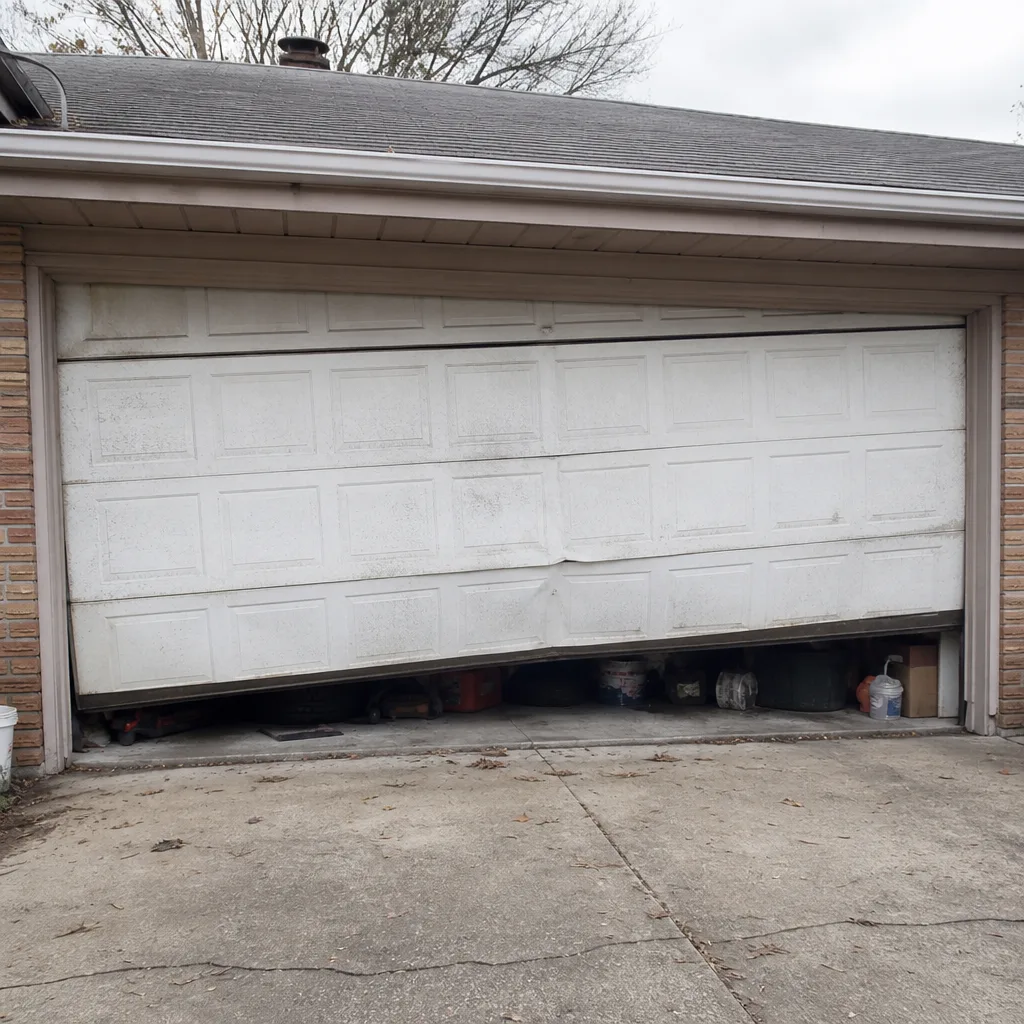 Before
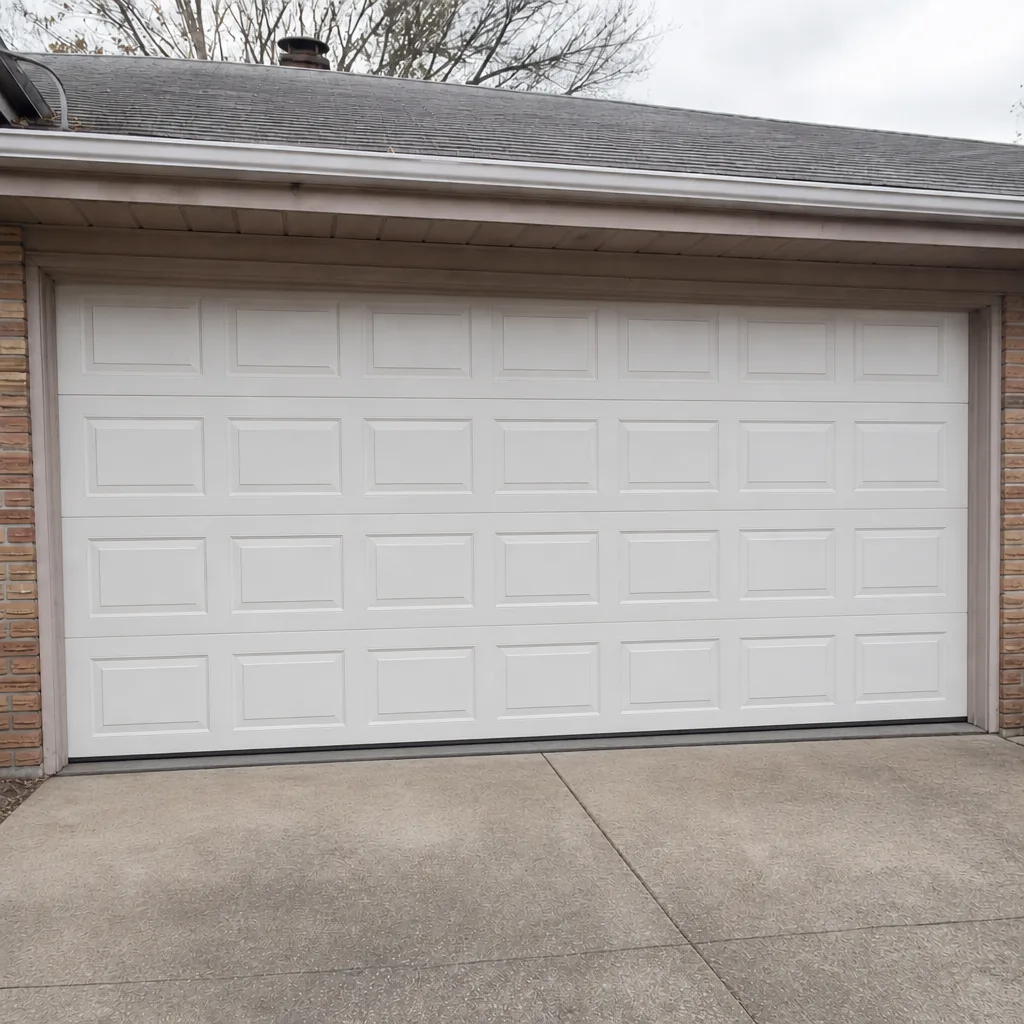 After
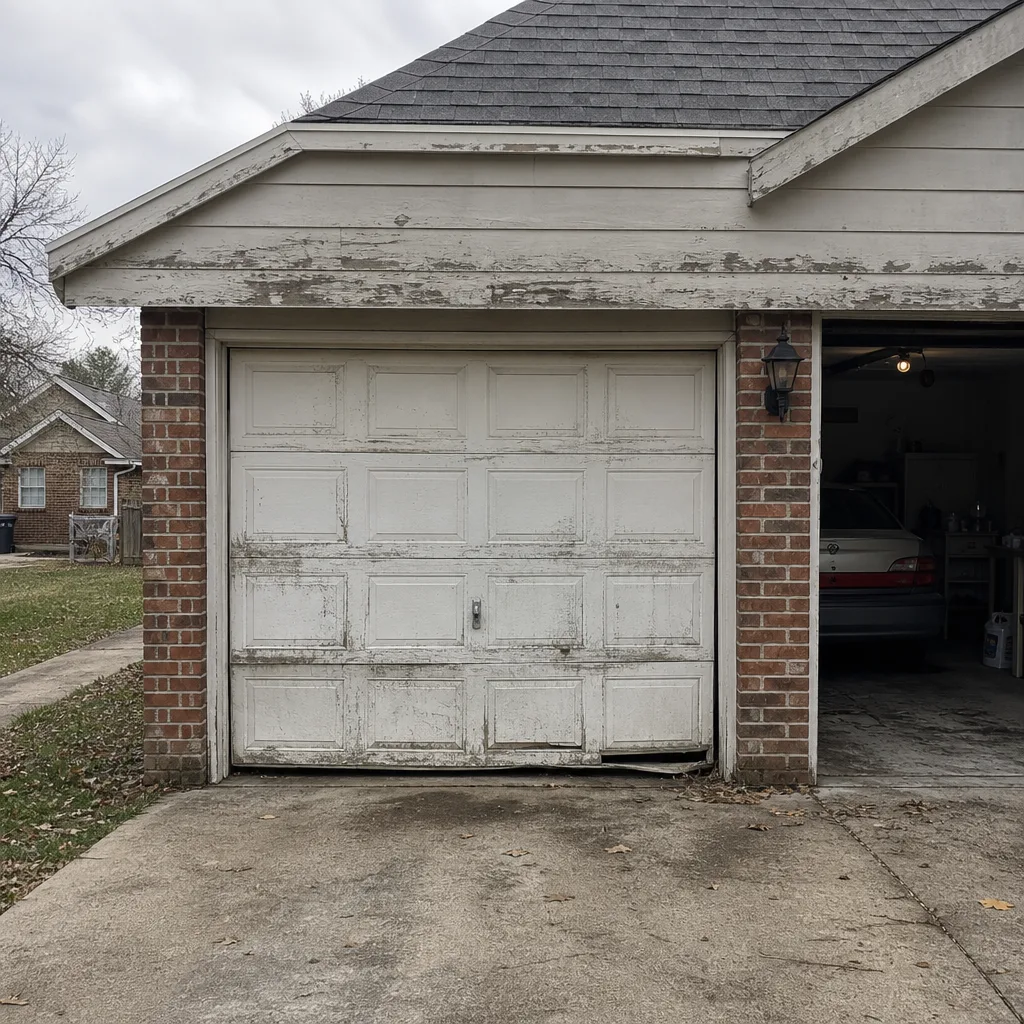 Before
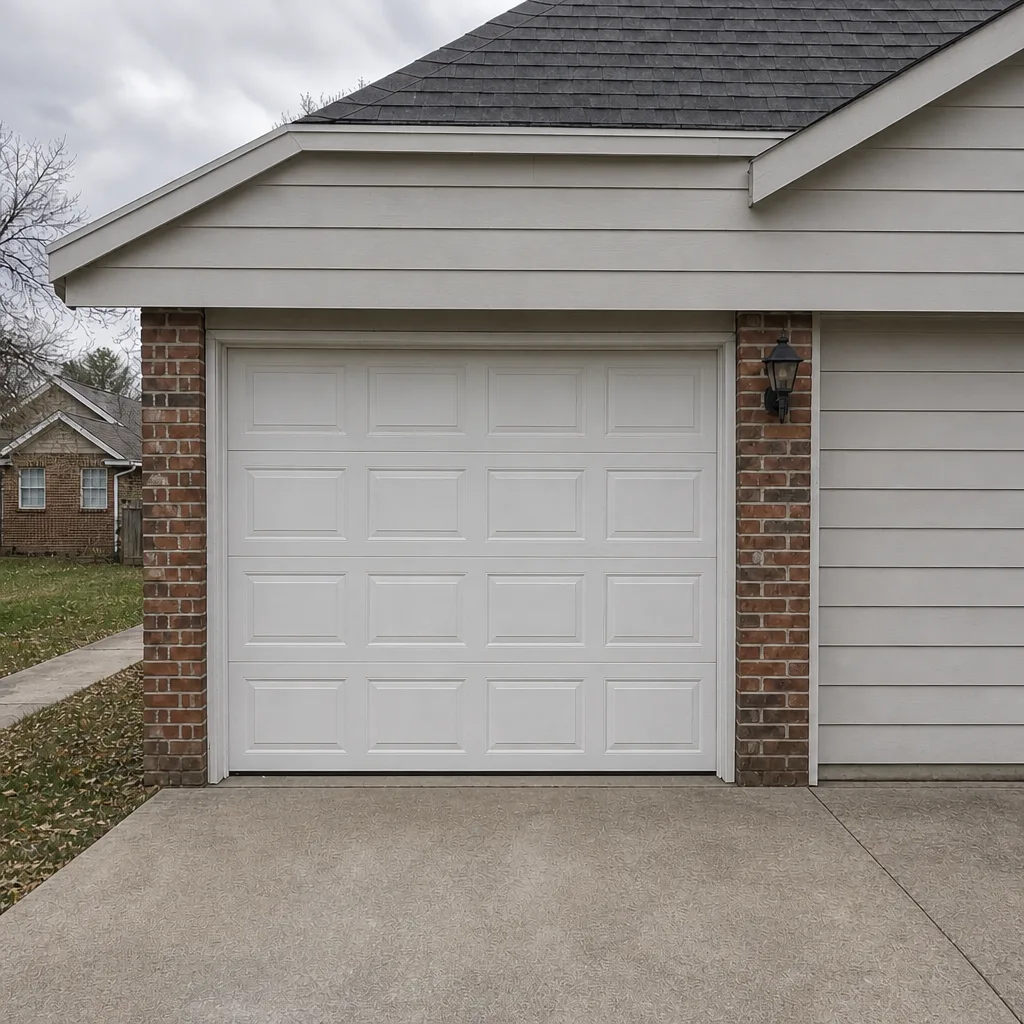 After
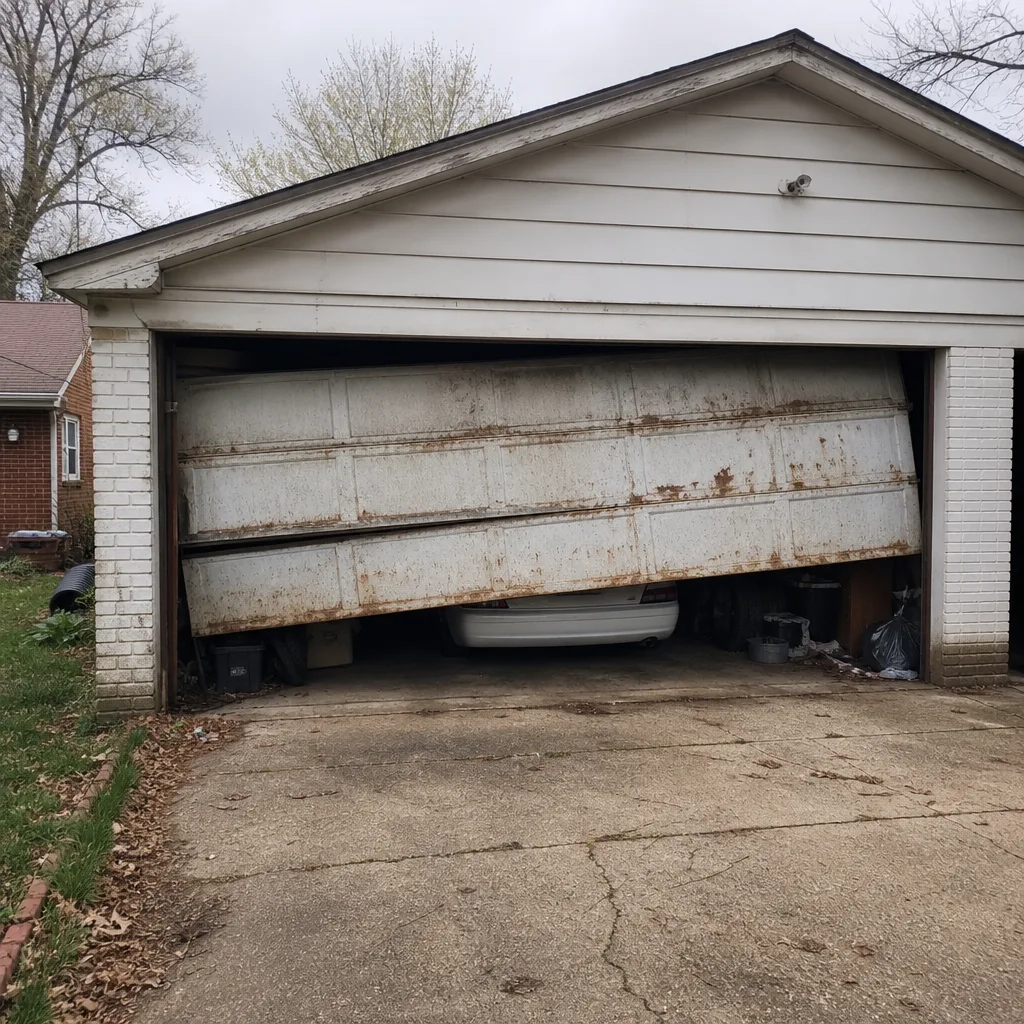 Before
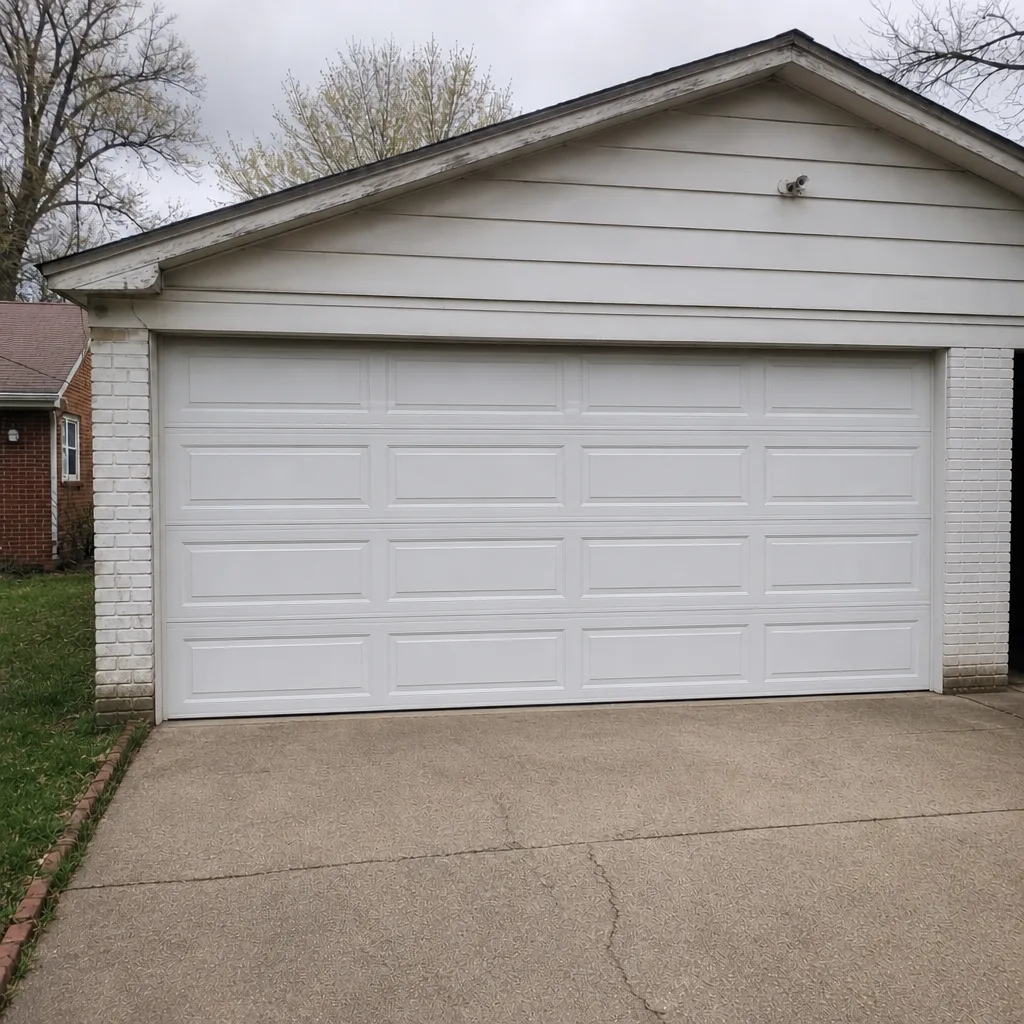 After
When to Call a Professional
Call us when the door is dangerous or the garage isn’t secure. Broken springs, loose cables, doors off their tracks, and doors stuck open all qualify. Spring and cable work is high-tension and genuinely dangerous, and it’s the part of the trade that separates specialists from generalists. We handle torsion and extension spring repair, opener repair across LiftMaster, Chamberlain, Genie, and Craftsman, and full door service on Clopay, Amarr, Wayne Dalton, and Raynor systems. Our technicians have up to 13 years of experience, and we quote the price before any work starts. Garage Door Repair Holly Hills offers free estimates in Holly Hills, and we’re open Sunday through Friday, 7am to 7pm, closed Saturday. Call (855) 550-7571 for an exact quote.
Frequently Asked Questions
Leave the door closed and check whether your opener has a battery backup. If it does, the door may open normally without household power. If it doesn’t, use the manual release cord only when the door is fully closed, pull it straight down, and lift the door by hand. Call (855) 550-7571 if the door feels too heavy or won’t move.
No. A door with a broken spring is unsupported and can drop hard. Keep it closed, secure the garage by other means, and call a professional. Spring repair is high-tension work that needs the right tools and training, and it’s not a job to attempt yourself. Call (855) 550-7571 for a free estimate.
Break the ice bond gently with a plastic scraper or a broom handle, working from one end to the other along the bottom seal. Never use metal near the seal or panels, and never run the opener against a frozen door. Clear the apron afterward so it doesn’t refreeze. If the door still won’t move, call (855) 550-7571.
We’re closed Saturday and open Sunday through Friday, 7am to 7pm. If a door fails on a Saturday, keep it closed and secure the garage, then call us and we’ll book you for Sunday. For a door stuck open, block the opening and lock the door to the house until we arrive.
Check panel alignment, track straightness, cable seating, spring condition, and the weather seal, in that order, then run the door by hand before using the opener. If anything looks bent, cracked, or off its track, leave the door closed and call. Call (855) 550-7571 for a free estimate.
No. We quote the price and agree it with you before any work starts, and the written estimate sets the final price. If we find something else while we’re there, we’ll show you and quote it separately before touching it. Call (855) 550-7571 for an exact quote, and estimates are free.
The Bottom Line
Garage door emergencies in Holly Hills come in three forms, and each needs its own response. Power outages call for the manual release, used straight down and only on a closed, healthy door. Frozen doors need gentle freeing before the opener runs. Storm damage needs a visual check of panels, tracks, cables, and springs before the door moves. Knowing which failure you’re facing protects the door, the opener, and the people in the garage. When a spring, cable, or track is involved, leave it closed and call. We’re open Sunday through Friday, 7am to 7pm, closed Saturday, and estimates are free. Call (855) 550-7571.
Written by the team at Garage Door Repair Holly Hills.